Michigan property tax is your home's taxable value times the total local millage rate, where one mill is $1 for every $1,000 of taxable value. In 2025, the total rate on a principal residence in the Metro Detroit communities below ran from about 36 mills in Troy to about 64 mills in Detroit, so a home with a taxable value of $150,000 would pay roughly $5,400 to $9,600 a year.
This guide shows where the number comes from, the 2025 rates for 12 cities and townships from the state's own report, a worked bill for a home you buy, and the credits and exemptions that lower it.
How is property tax calculated in Michigan?
Three steps:
- Taxable value. The assessor estimates market value, the assessed value is half of it, and after county and state review that becomes the state equalized value (SEV). Taxable value is the lower of the SEV or last year's taxable value raised by inflation or 5 percent, whichever is less (MCL 211.27a).
- Millage. Add up the mills levied by the city or township, county, school district, community college, library and other authorities where the home sits.
- Multiply. Taxable value times total mills, divided by 1,000.
Treasury's own example: a $50,000 taxable value at the 6-mill State Education Tax is $300.
| Taxable value | 36 mills | 45 mills | 56 mills | 64 mills |
|---|---|---|---|---|
| $100,000 | $3,600 | $4,500 | $5,600 | $6,400 |
| $150,000 | $5,400 | $6,750 | $8,400 | $9,600 |
| $200,000 | $7,200 | $9,000 | $11,200 | $12,800 |
Property tax rates in Metro Detroit, 2025
These are the total 2025 rates from Michigan Treasury's report, for the main school district in each place. They include special assessments levied by millage across the whole city or township, which matters in Canton Township, where they add about 9.4 mills. They leave out the 1 percent property tax administration fee some local units charge, and special assessments billed another way.
| Community | County | School district | Principal residence (mills) | Not a principal residence (mills) | Principal residence tax per $100,000 of taxable value |
|---|---|---|---|---|---|
| Lathrup Village | Oakland | Southfield Public Schools | 56.0342 | 66.6942 | $5,603 |
| Southfield | Oakland | Southfield Public Schools | 57.0201 | 67.6801 | $5,702 |
| Troy | Oakland | Troy School District | 36.0430 | 51.4634 | $3,604 |
| Royal Oak | Oakland | Royal Oak Schools | 37.9610 | 54.9301 | $3,796 |
| Farmington Hills | Oakland | Farmington Public Schools | 42.8732 | 55.7693 | $4,287 |
| Novi | Oakland | Novi Community School District | 36.3224 | 53.3094 | $3,632 |
| West Bloomfield Township | Oakland | West Bloomfield School District | 37.3862 | 53.9603 | $3,739 |
| Livonia | Wayne | Livonia Public Schools | 41.2361 | 59.2361 | $4,124 |
| Canton Township | Wayne | Plymouth-Canton Community Schools | 39.5486 | 57.5486 | $3,955 |
| Detroit | Wayne | Detroit City School District | 64.1844 | 82.1844 | $6,418 |
| Sterling Heights | Macomb | Utica Community Schools | 38.9277 | 56.9277 | $3,893 |
| Warren | Macomb | Warren Consolidated Schools | 52.9663 | 67.8289 | $5,297 |
Many cities and townships are split among several school districts, and the rate changes with the district. Troy, for example, has seven in Treasury's report, from 30.6309 to 42.2594 mills on a principal residence. The home's tax bill or parcel record names its district. Treasury posts the 2026 rates in spring 2027.
Rates describe a place's taxes, not its schools or anything else about it. For school information, see MI School Data.
What does "principal residence" change?
A home you own and live in as your principal residence is exempt from local school operating millage, up to 18 mills, once you file the Principal Residence Exemption affidavit with the assessor. A rental, second home or vacant house pays it.
The gap is not always 18 mills, because not every district levies the full amount on every kind of property. In the table it runs from 10.66 mills in Lathrup Village and Southfield to 18 mills in Livonia, Canton Township, Detroit and Sterling Heights.
Every property pays the 6-mill State Education Tax, principal residence or not.
A worked example: what you'd pay after buying
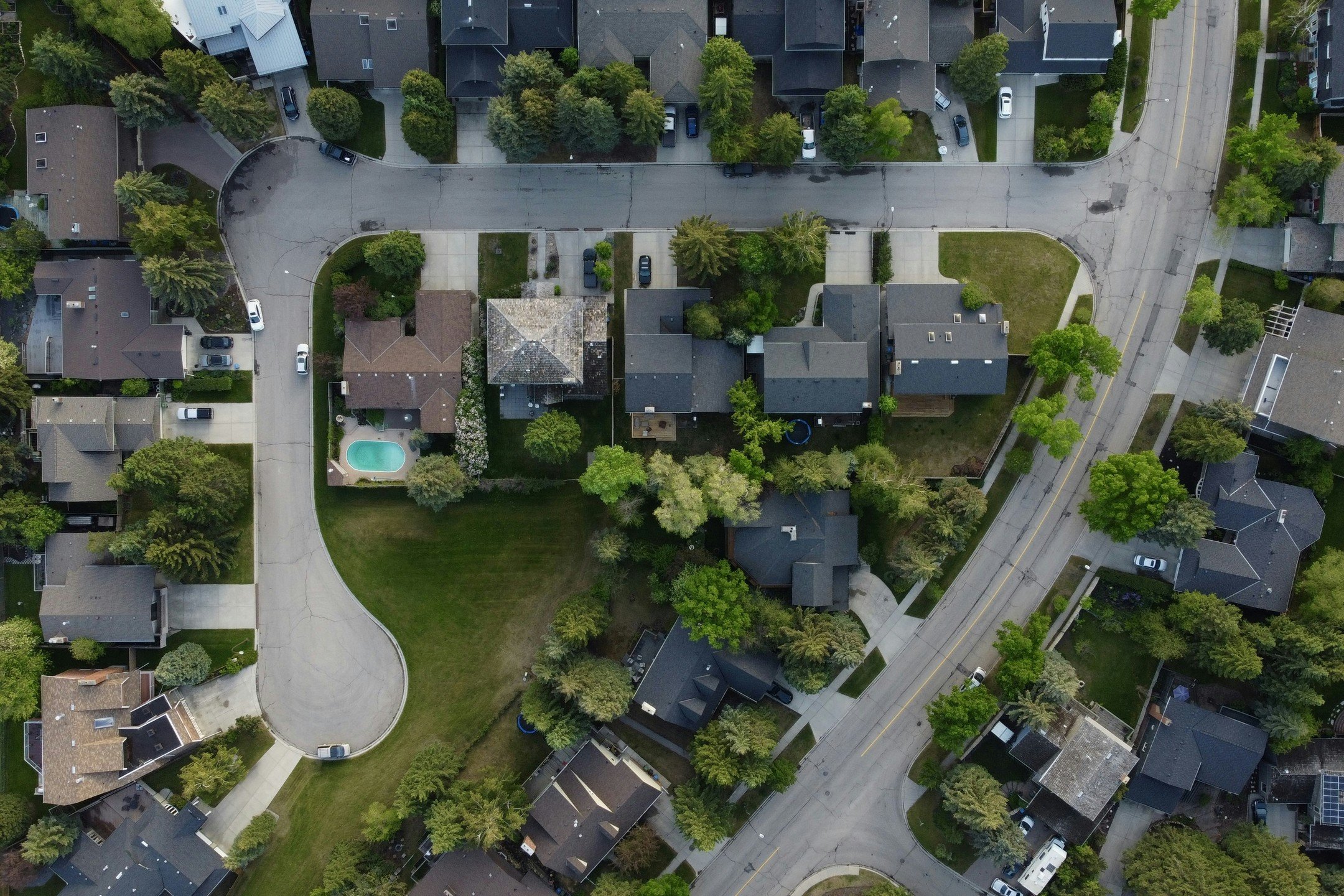
Say you buy a home in Troy, in the Troy School District, and its SEV is $150,000. Its seller has owned it for 20 years, and their taxable value is $95,000.
| Seller's bill | Your bill the year after you buy | |
|---|---|---|
| Taxable value | $95,000 | $150,000 (uncapped to the SEV) |
| Rate, principal residence | 36.0430 mills | 36.0430 mills |
| Yearly tax | $3,424 | $5,406 |
| If you don't file the Principal Residence Exemption | $7,720 (at 51.4634 mills) |
Two points from that example:
- Don't budget from the seller's bill. The sale uncaps the taxable value, and the year after you buy it resets to the SEV. Our guide to property tax uncapping explains how.
- File the exemption. In this example, missing it costs $2,313 a year.
From then on your taxable value is capped again. The cap uses Treasury's inflation rate multiplier: 1.031 for 2025 and 1.027 for 2026. Treasury had not published the 2027 figure as of early November 2026.
The rates in the example are 2025's, so your actual bill will also move with any millage changes voters approve. Our mortgage calculator adds your city and school district's rate to a monthly cost.
When are Michigan property taxes due?
Michigan bills property tax in summer and winter. Winter taxes are due December 1, and summer taxes July 1 where a summer tax is levied, payable without penalty through September 14 (charter cities can set other dates). Which taxes land on which bill depends on the community. Our guide to Michigan summer and winter property tax bills covers the due dates and what to expect at closing.
At what age do you stop paying property taxes in Michigan?
There isn't one. Michigan has no age at which homeowners stop paying property tax. What's available instead:
- Homestead Property Tax Credit. Claimed on the state income tax return. For tax year 2025, the home's taxable value must be $165,400 or less, total household resources $71,500 or less (the credit phases out above $62,500), and the credit is at most $1,900.
- Summer tax deferral. Owners 62 or older, and some other groups, who meet an income limit can defer the summer tax on their principal residence until February 14 without penalty or interest.
- Poverty exemption. A full or partial exemption on a principal residence for owners who can't pay because of poverty, applied for each year with the assessor or Board of Review.
- Disabled veterans exemption. A principal residence owned and occupied by a qualifying disabled veteran, or the unremarried surviving spouse, is exempt.
Are property taxes high in Michigan?
It depends on where, and on how long the owner has had the home. Two neighbors on the same street can pay very different amounts, because one's taxable value has been capped for years and the other's reset when they bought. Statewide "effective rate" figures online are estimates from survey data, and they mix those two groups together, so the SEV and the local millage give a buyer a more useful number.
Look up a home before you make an offer
To estimate a specific home, find its SEV and school district on the city or township's parcel record, then multiply by the rate above, or let our property tax calculator do it. If you are looking for a home, set up a home alert for the cities you're considering, and ask us for the SEV and current taxes on any home you want to see.